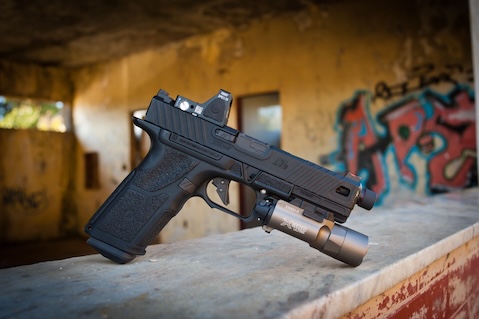
Pistol red dots and pistol-mounted lights have been around for quite some time. These products have seen a lot of innovation and improvement over the years, and the products on the market today are fantastic. In my experience, even many budget options hold zero well and are durable enough for most users. One thing that hasn’t gotten much focus is how these products affect the function of your pistol. These are typically considered plug-and-play accessories, but is that true? It is very possible that the addition of an optic or light will change how your pistol runs. Before you alter a pistol that will be carried, it is important to understand what might change so you can test for yourself.
Pistol-mounted lights Link to heading
On average, roughly 50% of the day will be dark. That means that seeing your target and being able to get a good sight picture will require some type of light source 50% of the time, and that’s without considering being somewhere that light is blocked out. A pistol-mounted light is a great solution to provide that light source while keeping your hands in a normal grip on your gun. But as with most things, there is no free lunch. That light is going to change the performance of the gun and you need to know to what extent to be sure your pistol is still reliable.
Adding a pistol-mounted light can lead to a change in function that causes failures to feed, bolt over base (the slide riding over the rear of a round that hasn’t risen into place), or slides closing on empty chambers. Why? Pistol-mounted lights add weight to the front of the frame. This has the nice side effect of reducing muzzle rise since the weight is out front. In my testing, it also reduces slide to frame friction caused by rotation and reduces frame flex in polymer framed pistols further reducing slide friction. This reduction in friction leads to faster slide velocities during cycling, and if the magazine spring can’t push the next round into place fast enough, then function will become erratic.
It is important to test pistol function with the ammunition that will be used in the pistol because ammunition is also a variable in slide speed. If your pistol has function problems with a light attached then there are two key items to check before anything else:
- Recoil spring - A worn recoil spring will have less spring force and allow the slide to move faster regardless of the light. Intervals vary by model, so consult your owner’s manual first, but a rule of thumb is to replace recoil springs every 3,000 rounds for single springs and 5,000 rounds for dual nested springs.
- Magazine spring - If your magazine spring is worn out then it will have less force pushing up on the rounds. This leads to slower times to push the next round up to the feed lips. Ensure that you are using magazines that are in good condition. This one is harder to characterize with a general rule, but if your individual magazine has over 2,000 rounds on it then I would try a new magazine.
If the two common fixes don’t correct your performance, then you need to slow the slide down for reliable performance with the light attached. This will typically mean adding weight to the slide (see red dot section) or installing a recoil spring with more force. Going to aftermarket components for something as critical as a recoil spring should never be done lightly, so consult a gunsmith if this is required.
Slide-mounted red dot Link to heading
I will admit to having had a strong dislike of pistol red dots in the early 2010s. Many of us had trained on only iron sights and with that came specific muscle memory. With the first handful of red dot equipped pistols that I tried, I couldn’t find the dot. This isn’t a training post, but trust me that once you spend time learning how to present the pistol you will find the red dot to be an excellent sighting system.
The red dot is going to have the opposite effect on the system that the pistol light has. The slide mounted red dot adds weight to the reciprocating part of the pistol, and because of physics this means that the slide will run slower. The risk is that the added weight will not allow the slide to fully cycle. This means that you might see bolt over base stoppages, the action closing empty, or failure to lock back. Unfortunately for troubleshooting, these are some of the same stoppages that the pistol light might cause. This may cause confusion if you have both accessories attached. If that is the case, then go back to basic test principles and only change one variable at a time to see which accessory is causing the issue. If you have a high speed camera you can run the kinematics and know for sure, but that is out of many people’s budgets.
Correcting a slide that is too slow because of an added red dot only has a couple of options. First, you can install a lighter recoil spring, but I’ll give the same caution of using aftermarket components without a good amount of knowledge and/or testing to ensure good function. The other option is to replace the red dot with a lighter option that will allow the pistol to function properly.
Issues not caused by slide velocity Link to heading
The tricky thing about red dots is that we need to look at more than just the change in slide velocity.
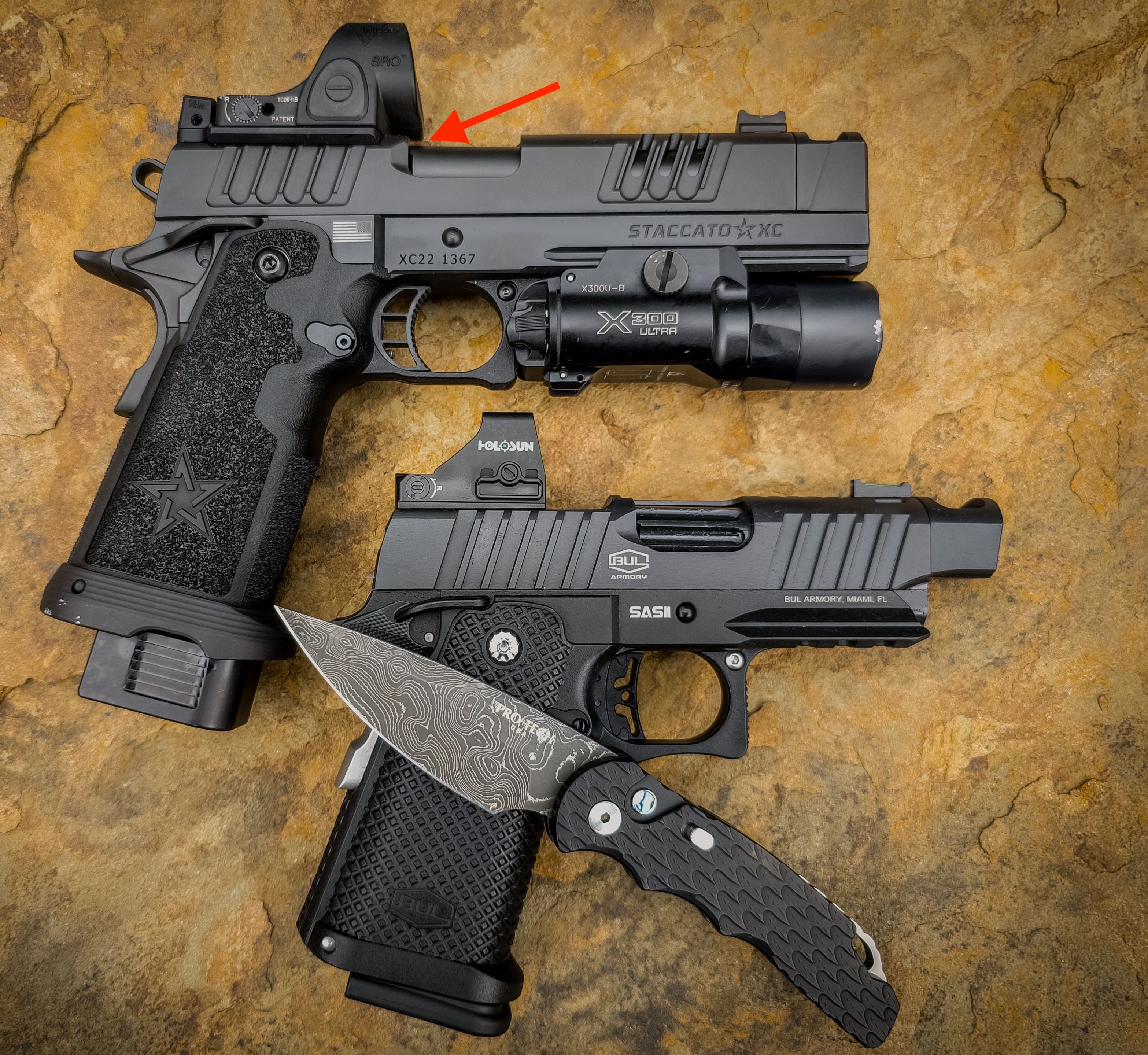
One possible issue is any obstruction or interruption to the ejection pattern causing stoppages. The most obvious case of this that I have seen is the Trijicon SRO. The front hood of the SRO slightly overhangs into the ejection port when mounted on many pistols. This can cause the ejecting spent case to be blocked and lead to trapped cases. I’m picking on the SRO here because it is popular and well known for the overhang, but any optic that overhangs the ejection port could cause this issue. The ejection pattern and geometry of the optic may also not work well together. If you see brass shooting forward (and brass marks on your optic), then it is likely that the brass is being struck by the optic during ejection. This can also lead to stoppages.
The second common issue is specific to GLOCK and GLOCK-style slides. The extractor on a GLOCK pistol is given tension by a rod and spring that run from the back of the slide to the extractor. This design far predates slide mounted red dots and it happens that the mounting hole on the right side of the slide sits right over that rod providing tension to the extractor. This means that screw length is critical. Too short, and the optic is not retained well. Too long, and the screw hits this rod and will create extractor problems. This is something to be very careful with on Gen 5 and earlier GLOCKs (Gen 6 addressed this).
Summary Link to heading
Pistol-mounted lights and red dots are both accessories that make a lot of sense on a handgun, but both options have the potential to cause problems. A light tends to speed the slide up and a red dot tends to slow it down, so test the pistol with the exact combination you plan to carry. It is important to verify the function of the pistol with the attached accessories before trusting it to be reliable.
If you need to go deeper on testing accessory combinations, reach out through the work with me page.