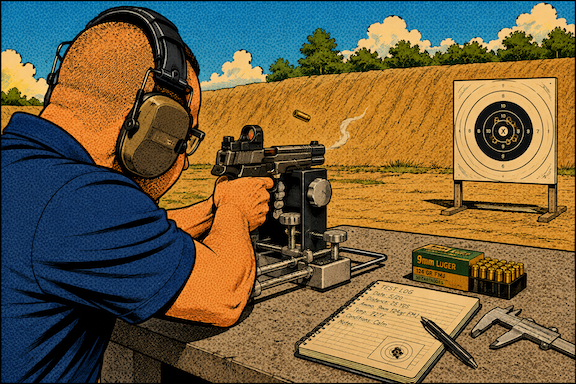
Have you tried testing the true accuracy of a pistol before? If you have, then you know how very difficult it can be. But it is also something that most of us want to know about new products. That’s why a recent article about the KelTec PR57 caught my eye (https://www.ammoland.com/2026/08/keltec-pr57-review-top-loading-5-7-pistol/). The article’s title promises to tell the reader the accuracy potential of this pistol. This is always a top interest around the pistols chambered in 5.7x28mm, and one common topic of discussion is the ability to extend range with this cartridge. I was naturally curious to get this writer’s take on how the pistol performed, but I was surprised by the article.
Roughly half of the article presented accuracy data from the PR57 that was less than flattering with poor group sizes reported at 25 and 100 yards. I was disappointed because this is a really unique offering and I hoped that the performance would hold up. But wait! The second half of the article provided new test results where a different pistol rest had been used. These accuracy results were much improved over the first round, and the author concluded that the first rest used was the reason for the poor results initially given.
The tools of improvement Link to heading
I want to say upfront that I am in no way trying to disparage this author. My reason for bringing this topic up is because I too have struggled with the best method to test the accuracy of a pistol and not test the shooter’s ability. Trying to get the sights perfectly centered on the bullseye, putting pistol irons back on the exact same hold spot every shot, and pulling the trigger without the pistol moving is far more challenging on a pistol than a rifle!
Over my time as a test engineer I have tried everyting from the most expensive to the most basic methods for pistol accuracy testing. One thing that I know for sure is that shooting with no supporting fixture is not the answer! So what are our options and the tradeoffs for each?
- Ransom Rest - The gold standard option for removing the shooter from the equation. Sounds great, right? In my experience, the setup of the Ransom Rest is absolutely crucial to the ability of this product to provide repeatable results, and that setup is not trivial. On more than one occasion a person with a crude rest has been able to outshoot what I have done on a Ransom Rest. Does this mean it’s a bad product? Absolutely NOT! But it does mean that your setup procedures must be thoroughly documented and meticulously followed every time.
- Bill Wiseman - Bill Wiseman & Co. offers custom fixture solutions including universal receivers that will accept a barrel. If your need is for component level testing then they might be able to create a solution tailored to just you. The pros of this are no shooter in the loop and a consistent platform that should provide repeatable results. The con is for those who need to test the pistol as an assembly and not just a barrel.
- General off the shelf pistol rests - This solution is really many options lumped into one category. There are many offerings for pistol rests that offer you a stabilized platform to pull the trigger from. Basic offerings from companies such as Caldwell and MTM give you a no frills platform to keep the pistol still while pulling the trigger. More advanced offerings like those from HySkore offer some additional methods of control to help eliminate the ability of the pistol to move. These products will help a shooter stay steady while pulling the trigger. The downside is that the shooter does still need to perform in order to achieve proper results.
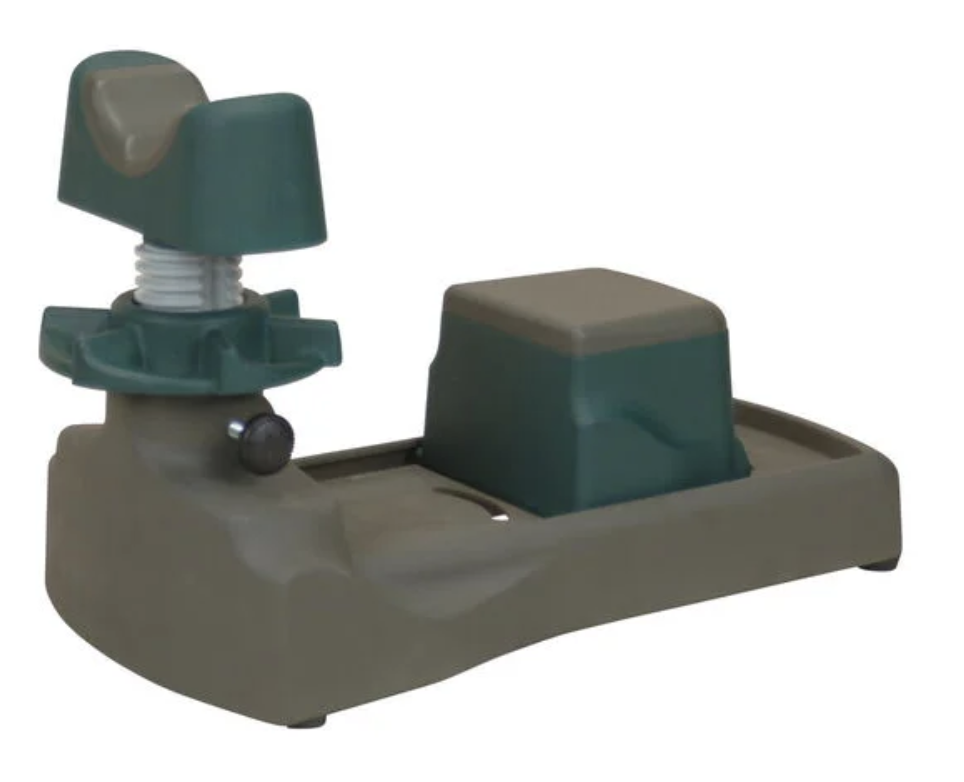
One of Caldwell’s offerings. Source: https://www.caldwellshooting.com/rests/shooting-rests/the-pistolero/562771.html#start=1
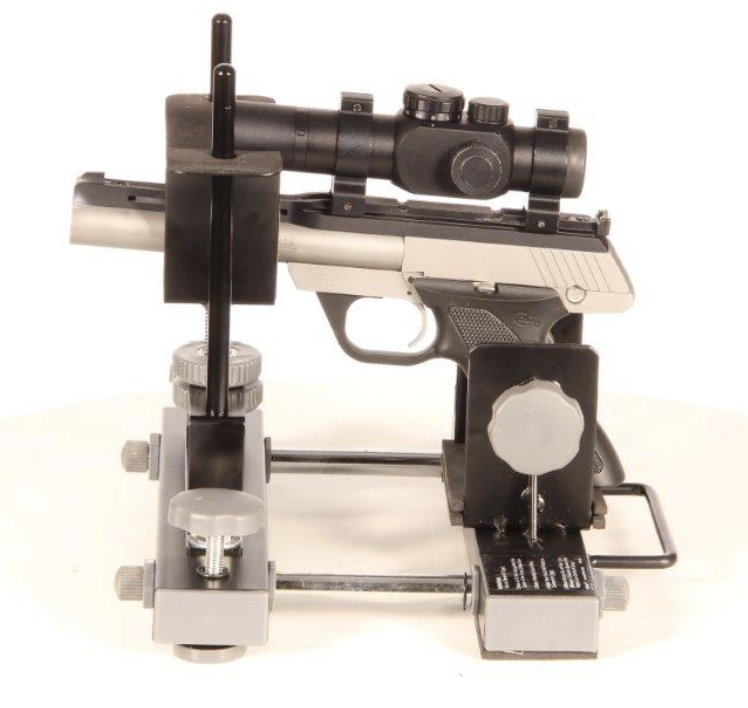
I’m interested in trying out this HySkore. Source: https://hyskore.com/products/30018-parallax-sighting-rest/
In my experience, the general pistol rest is right for most of the people most of the time. There are levels to choose from that will offer a little more or a little less fixturing in this category. The key items to control for optimal results are the ability to hold the pistol still while pulling the trigger and the ease of resetting the sights on target in the same spot from shot to shot. Of those general pistol rest offerings, I honestly don’t have a favorite quite yet so my advice is to take a stab at what features you need and maybe be ready to buy a couple for comparison.
What sights? Link to heading
Speaking of keeping the sights aligned on the same spot from shot to shot, how do we decide if we will test using iron sights or an optic? The answer may very well be driven by your requirements. If you need to validate that the windage and elevation of the sights are correct to the design then you’re testing with irons. If you need to check the inherent accuracy of the pistol and not necessarily the iron sights, then I highly recommend attaching a red dot when possible. The red dot will allow a much more repeatable method to get back on the bullseye compared to perfectly re-aligning your irons. Rifles offer a cheek rest that positions your head in the same spot behind the sights every time. A pistol gives you nothing of the sort. Even from a braced position, there is enough freedom of movement that sight alignment becomes a non-trivial variable when you are testing the limits of accuracy.
I hope that you find this information useful. If you have a pistol accuracy rest that you love that wasn’t mentioned here, I would love to hear from you!