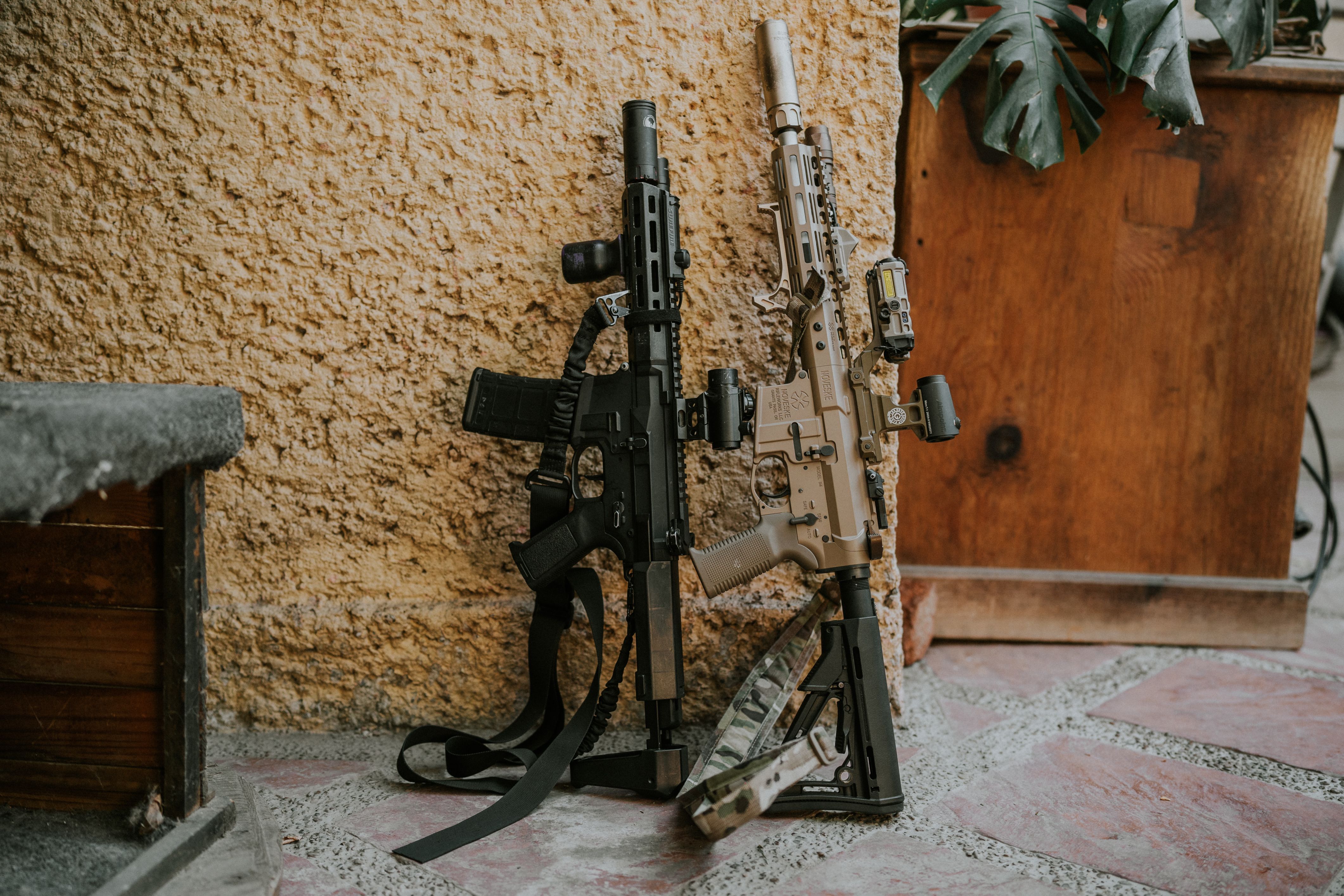
Firearm suppressors have been around for a long time but didn’t gain widespread commercial popularity until roughly the last 15 to 20 years. Suppressors are a great technology that finally has a fast-growing mainstream market thanks to the elimination of the $200 per item tax and, as of this writing, ATF’s decision to stop enforcing NFA registration for suppressors. This means that consumers can now do a standard 4473 transfer at the dealer for suppressors. As someone with hundreds of thousands of rounds fired, and a bit of hearing loss to go with it, I wish that suppression had been a little more universal.
But this technology also comes with challenges.
As regulations on suppressors decrease, there will be an increase in ownership of suppressors along with far more manufacturing and development. As great as suppressors are, they can pose a challenge for semi-auto firearms by changing the function enough to make the gun unreliable. Systems can be difficult and a suppressed firearm system is no different, so let’s cover the most common issues that will get a large majority of people up and running.
What will a suppressor change? Link to heading
In very broad terms the job of a suppressor is to slow and cool the expanding propellant gases to reduce the sound. This has historically been accomplished with baffles that trap the gas and then allow it to more slowly release. The widespread use of metal 3D printing has allowed the technology of handling gas to rapidly improve, so we’ll talk about a caveat to the general rules too.
In general, suppressors are going to cause a semi-automatic rifle to run faster because of excess back pressure in the bore. This pressure happens because the trapped gas inside of the suppressor keeps pressure on the whole system. When the action of a firearm unlocks, that pressure in the bore pushes backward and causes everything to run faster compared to running unsuppressed. How much of a change in operating system velocity will depend on the suppressor technology being used.
A second area to be aware of when using a suppressor is the faster accumulation of buildup in the firearm. You’re absolutely going to need to clean and lube more often. The increased back pressure from the barrel is going to bring more than just gas with it. Particulates caused by the burning powder that would normally go out the end of the barrel are now going to be blown back into the action.
Making the gun run Link to heading
Maintenance Link to heading
Excess buildup is the easy one to tackle.
- Oil is your friend, use it liberally
- Clean your gun often
Contrary to some schools of thought, a good coat of oil will allow debris to be moved away from the sliding surfaces as the gun cycles. In my experience on multiple weapon platforms, oil has not acted as a dirt magnet that seizes the gun. Quite the opposite in fact, I have witnessed guns stop functioning due to under lubrication that are immediately fixed by applying a good coat of oil. I highly recommend keeping a nice coat of oil on any part of the firearm that will be moving to keep things functioning correctly (a light coat on the rest for rust prevention also isn’t a bad move).
Cleaning more often is also going to be a requirement with a suppressor attached to a semi-automatic. I recommend that you look at the internals and expect to clean every 250 to 500 rounds depending on the gun-caliber-suppressor combination.
Tuning Link to heading
If your gun is cleaned and oiled but still has function problems when suppressed, then we need to look at altering the tuning. We have a few options on gas-operated semi-auto rifles, though some are specific to AR-style rifles. We’ll cover pistols separately.
With a traditional baffle suppressor it is common for the action to speed up due to increased back pressure. First, we want to confirm this, and then we need to fix it. Common symptoms of a gun running too fast are:
- Trapped spent cases combined with forward ejection
- Inconsistent feeding from the magazine
- Closing on an empty chamber when the recoil feels strong
If the symptoms point to the gun running too fast, then we need to take action to slow it down. There are three common options to accomplish this and one less common option.
1. Heavier buffer (for buffer-equipped rifles) Link to heading
Why: Adding more buffer mass will help slow the action down. The buffer weight exists to add weight to the system that reciprocates in an AR-type rifle. Making that system heavier means that with an equal amount of applied force, the system will move slower. (NOTE: The opposite is also true, if the gun is running too slow or short stroking then a lighter buffer can help)
Watch out for: The downside here is initial rifle tuning. Many off-the-shelf AR-style rifles already need an H or H2 buffer to run in what I would consider the sweet zone. This means that your options are an H3 or a proprietary buffer over that weight. This is still a good, simple option to get the rifle running, but you may end up with a collection of buffers while finding the right one.
2. Adjustable gas block Link to heading
Why: For a rifle that is gas driven by some means, there will be a hole in the barrel and a method to route gas to whatever mechanism uses that gas to drive the gun. One option to slow down the action speed is to install a device that allows the user to adjust that gas flow for your given rifle. This will allow you to dial down the gas until everything is running correctly.
Watch out for: There are two big caveats here. First, I have only used one adjustable gas block that does not seize into place due to carbon buildup. I’ve not tried every adjustable gas block, so maybe there is another option, but I consider adjustable gas blocks to be a tool for re-tuning the gun once and not as something that can be regularly changed.
The second caveat depends on your use case. If you use your rifle in defense of your life then I highly recommend that you set up the rifle as it will be used and leave it that way. We have discussed how dramatically a suppressor can change function, so taking that suppressor on and off and expecting reliable performance should not be done lightly. Also, using a product that does allow alteration of the gas regularly can lead to the wrong setting being applied in the wrong situation under stress. In a life or death situation, the rifle needs to be set up in a reliable way without the need for adjustment.
3. Enhanced bolt carrier Link to heading
Why: This is another AR-specific change. There are a handful of companies that sell bolt carrier groups with more venting, altered cam paths, or a combination of the two. I’ve not used these enough to speak to how much of a change they will make, but this change in combination with a heavier buffer could be a good option.
Watch out for: The bolt carrier is a critical part of the AR operating system. Test everything well to be sure that the part you purchased functions as intended.
4. Barrel replacement with tuned gas port Link to heading
Why: This is the less common fix for the consumer, but it is also the most permanent fix. Buying a barrel with a small gas port and custom-sizing it to your specific combination of parts gets the whole system in tune while using the original gas block, bolt carrier, and buffer weight. If the gun wears in over time and speeds up then you still have options 1-3 at your disposal.
Watch out for: Tuning can be a little tricky. This is something that is normally done by engineering groups at the manufacturer and verified on high-speed video equipment followed by extensive testing. It can be done, but if you’re unsure then consult someone with more experience.
The pistol specific answer - the Nielsen device Link to heading
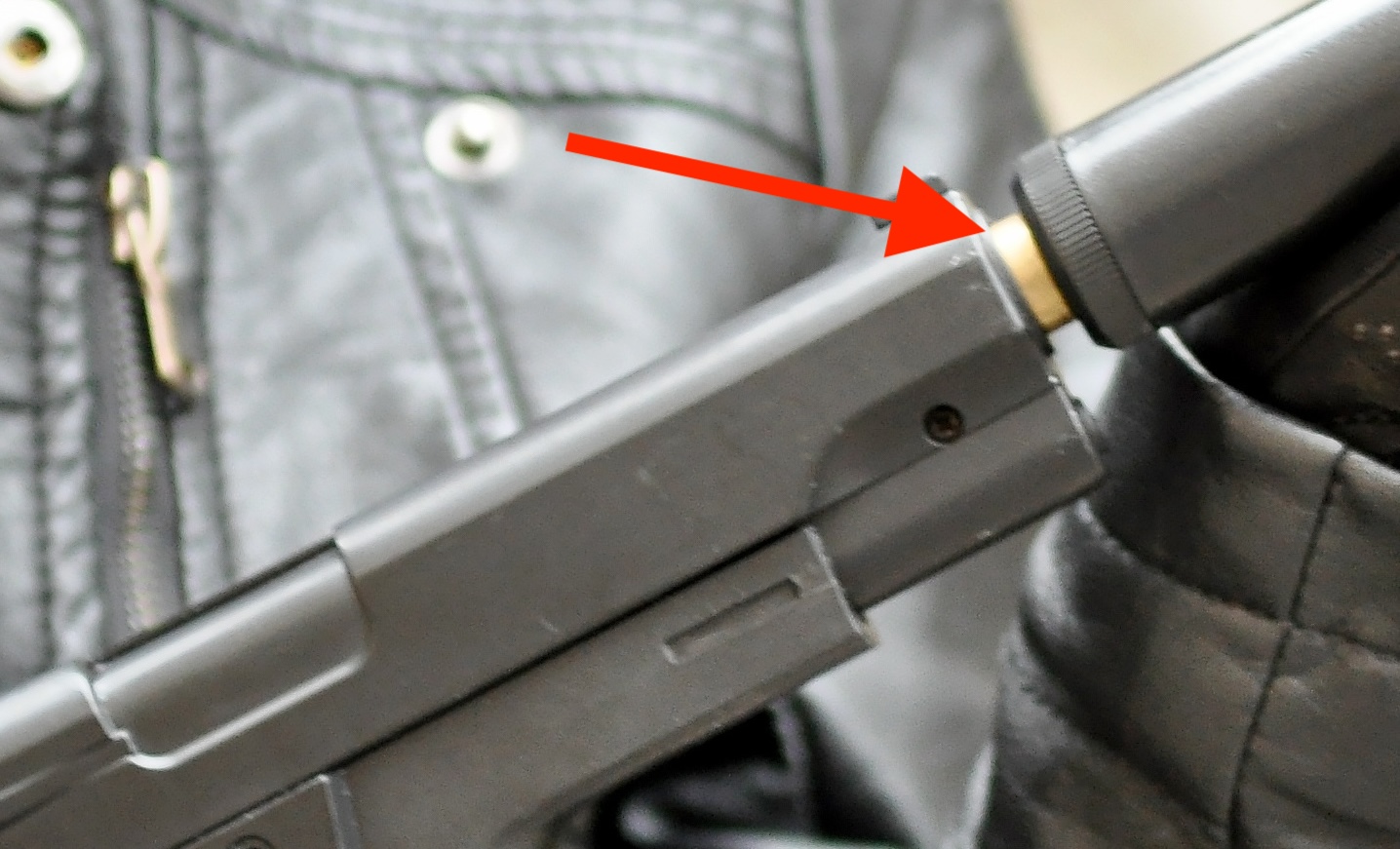
Most modern centerfire pistols use a tilting barrel locking design. Adding a suppressor adds significant mass to the system and this leads to problems with function. These pistols need some help to function and that help is called a Nielsen device, or booster. This device consists of a piston and a spring. The Nielsen device allows the pistol to move without the suppressor moving with it, and then the spring in the Nielsen device moves the suppressor back to its correct position after the action of the pistol has unlocked. The red arrow in the photo points to the piston on the Nielsen device which threads on to the barrel.
The Nielsen device should only be used on a tilting barrel design. A fixed barrel does not need the Nielsen device and it may cause other problems. Assuming you’re using a tilting barrel pistol, check these items if you’re having a problem:
- You have a Nielsen device/booster installed (they don’t always come with the suppressor).
- The Nielsen device is working - Check this by pulling on the gun and suppressor in opposite directions. The Nielsen device should move back and forth under the spring pressure. If this fails, then clean and re-lubricate.
- The spring is not worn out - If the check from step 2 allows you to pull the suppressor away with very little or no force, then the spring likely needs to be replaced.
These steps should help alleviate most pistol issues. Just like the rest of the gun, don’t forget to keep the Nielsen device lubricated on the moving parts. I recommend high temperature grease of some sort for this, but check your suppressor’s manual first for any manufacturer guidance.
The opposite problem Link to heading
The typical suppressor problem is overgassing, but the opposite can be true. How can that be? The main cause is newer low back pressure suppressors.
Low back pressure suppressors Link to heading
There are some suppressor technologies that, thanks to 3D printing, handle expanding gas in a way that has little effect on the operating system velocity. One well known example of this is HuxWrx and their flow-through technology. The good thing about this technology is that the tuning of the rifle changes very little with this suppressor. The downside is that a borderline gun can end up running too slow. Let’s take the common example of .300 Blackout to illustrate what can happen.
As a cartridge, .300 Blackout is unusual because it was designed around both subsonic and supersonic ammunition. While this provides excellent versatility, it also creates a very difficult tuning situation. Subsonic ammunition generally results in lower operating system velocities than supersonic, so trying to tune in the middle of all of these makes subsonic just barely run. This historically hasn’t been an issue because traditional suppressor back pressure gives a little extra velocity when that lower-pressure ammunition is used. However, with the flow-through and similar suppressors not providing extra velocity, it is possible that the gun will run too slow and not function.
Summary Link to heading
Firearms are a system and suppressors add complication to that system. It will take some work to make sure that the system runs correctly when you add a suppressor, but the payoff is worth the extra effort. What has been covered here are the most common issues and solutions. If you need to go deeper, then reach out, and if you need help setting up a test program to qualify a system then head over to the work with me page and set up a meeting to see if ProArms Tech can help you.